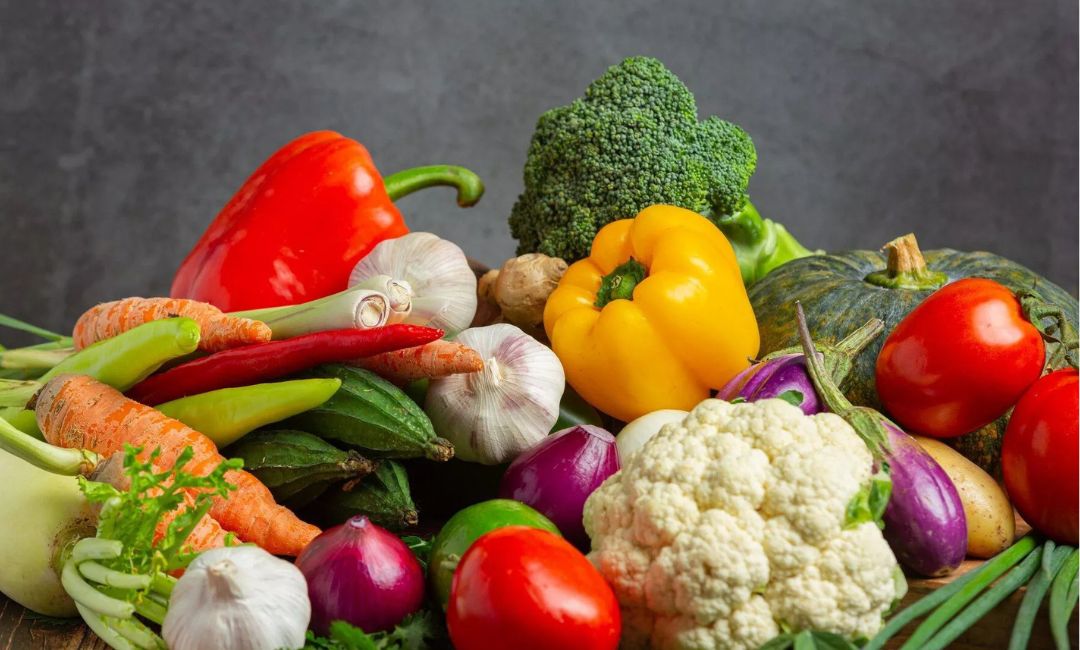
Vegetables are an important part of a healthy and balanced diet in human life. These are also known for making an important contribution to human health and nutrition. Vegetables are natural sources of vitamins, minerals , dietary fiber, and other bioactive compounds such as flavonoids, polyphenols, carotenoids, antioxidants, and therapeutics. These components reduce risk of disease and are given below in table.
| Category | Examples | Health Benefits |
| Vitamins | • A • C • E • K • B-complex |
• Boosts immunity • Promotes skin health • Supports vision and blood clotting • Aids energy metabolism |
| Minerals | • Iron • Calcium • Magnesium • Potassium |
• Enhances bone health • Regulates blood pressure • Supports nerve function • Helps oxygen transport |
| Dietary Fiber | • Soluble fiber • Insoluble fiber |
• Improves digestive health • Controls blood sugar levels • Reduces cholesterol |
| Flavonoids | • Quercetin • Kaempferol • Luteolin |
• Acts as antioxidants • Reduces inflammation • May prevent chronic diseases |
| Polyphenols | • Phenolic acids • Stilbenes • Tannins |
• Protects from oxidative stress • Has anti-aging effects • Promotes heart health |
| Carotenoids | • Beta-carotene • Lycopene • Lutein • Zeaxanthin |
• Supports eye health • Offers antioxidant protection • Lowers cancer risk |
| Glucosinolates | • Found in cruciferous vegetables like: • Broccoli • Cabbage • Kale |
• Activates detoxifying enzymes • Provides anti-inflammatory effects • Helps in cancer prevention |
Daily consumption of vegetables is associated with lowering risk of chronic and non-communicable diseases such as cardiovascular disease, obesity, type 2 diabetes, some kinds of cancers, and neuro-degenerative diseases.
Worldwide dietary recommendations for consumption
Vegetable consumption is an important recommendation in many dietary interventions that protect health at a global level. Numerous organizations, including the World Health Organization (WHO), Food and Agriculture Organization (FAO), provide daily consumption of at least 400 grams per day of fruit and vegetable consumption to prevent micronutrient defects and non-transferable diseases. In addition to health benefits, vegetables support nutritional safety, sustainability, and livelihoods, especially for people in countries with low and medium sartos where vegetables are common money.
Economic and nutritional importance
They have advantages, but almost half of the harvested vegetables are wasted, so it never becomes anything to the consumer. Their high moisture content, soft texture and metabolic content make them very spoiled and susceptible to severe post-harvest losses. As estimated by the FAO, 40-50% of all fruit and vegetable production is lost or wasted. This amounts to around $750 billion in global economic losses. Loss not only reduced food supply from nutrient foods, but also caused greenhouse gas emissions and environmental sequencing through land, water and energy. For more on healthy nutrition and brain-friendly food choices, see this comprehensive nutrition guide.
Problem of spoilage
decompose is usually caused by a combination of physiological degradation, biochemical changes and microbiological contamination. Microbial infections, especially mushrooms, may be the most relevant cause of vegetable spoilers during and after harvest.
Major Spoilage Pathogens
Fungi are the most common post harvest microbial contaminants of fresh vegetables among microbial contaminants. Important genera include
- Colletotrichum,
- Alternaria,
- Rhizopus,
- Fusarium,
- Aspergillus,
- Penicillium,
- Botrytis.
Health-Promoting Nutritional Components of Vegetables
- Vegetables are abundant in natural antioxidants, vitamins, and minerals.
- These components contribute to cellular protection from oxidative damage, regulate immune response and decrease inflammation. Below is an indicative table of the nutritional properties of various vegetables.
Table 1: Vegetables with Their Family, Category, Antioxidants, and Health Benefits
| Vegetable | Family | Category | Key Antioxidants | Specific Health Benefits |
| Spinach | Amaranthaceae | Leafy green | Lutein, Beta-carotene, Vitamin C, E | Eye health, antioxidant defense, immune support |
| Carrot | Apiaceae | Root | Beta-carotene, Lutein | Eye health, cancer prevention |
| Broccoli | Brassicaceae | Cruciferous | Sulforaphane, Vitamin C, Quercetin | Anti-cancer, liver detoxification, inflammation reduction |
| Tomato | Solanaceae | Fruit vegetable | Lycopene, Vitamin C | Heart health, UV protection, cancer risk reduction |
| Garlic | Amaryllidaceae | Bulb | Allicin, Selenium | Antimicrobial, cholesterol lowering, immune system support |
| Sweet Potato | Convolvulaceae | Root | Beta-carotene, Anthocyanins | Blood sugar regulation, vision health |
| Kale | Brassicaceae | Leafy green | Kaempferol, Quercetin | Anti-inflammatory, antioxidant protection |
| Bell Pepper | Solanaceae | Fruit vegetable | Vitamin C, Capsaicin, Beta-carotene | Immunity booster, pain relief, skin health |
| Onion | Amaryllidaceae | Bulb | Quercetin, Sulfur compounds | Anti-inflammatory, heart health, blood pressure control |
| Beetroot | Amaranthaceae | Root | Betalains, Nitrates | Blood pressure regulation, antioxidant support |
Ethylene and Respiratory Action in Vegetables
Most vegetables are classified as being non-climacteric, but there is certain vegetable-type exhibit ethylene sensitivity that causes respiration rates to increase above the non-climacteric state. Ethylene causes termination (senescence) and ripening of produce, which also increases the likelihood of microbial action and loss of quality in produce.
Sustainable Solutions:
Considering the negative attributes surrounding synthetic fungicides, researchers are turning to natural antibiotic active ingredients such as essential oils (EO). EO is a natural connection between plant sources with antioxidants and antibacterial properties, and is generally considered safe (grass). However, due to their volatility and sensory effects, they only have limited food livelihoods.
Conclusion
The important role of vegetables to health and nutritional security cannot be understated. As highly perishable foods, vegetables habitually are subject to perishability by the effect of physiological, enzymatic and microbiological interactions. Understanding these actions will assist in loss reduction and improvement of food safety. Future research that explores the bioactive components of vegetables and their inherent defense systems will enable eco-friendly solutions to reduce spoilage, preserve quality and protect public health. For detailed insights on the nutritional benefits and preservation of potatoes, visit this comprehensive guide on Potato Nutrition Benefits and Food Safety.